The International Schools Association (ISA) continues to strengthen its commitment to meaningful, collaborative education through STEAM initiatives that connect students from around the world. Now in its third edition, the inter-school greenhouse project has become an annual initiative since its launch in 2023.
The 2025–2026 edition focused on a sustainability-driven project titled “School Greenhouse – Using Hydroponics and Organic Residues.” Students and teachers from Swostishree School (Nepal), Nika School (Russia), Avant Garde Academy (USA), and the British International School (Russia) worked together under the academic guidance of the Federal University of Rondonopolis (Brazil).
The project, hosted by the University of Rondonopolis, concluded with a final presentation session on Friday, April 24, 2026. The event opened with remarks from Edgardo Manzitti, Secretary General of ISA, who highlighted the value of international collaboration and applied science. He was followed by Dr. Ricardo Bazan, Academic Advisor, who guided the students throughout the project, and Dr. Jofran Olivera, who supported the teams during the development phase.
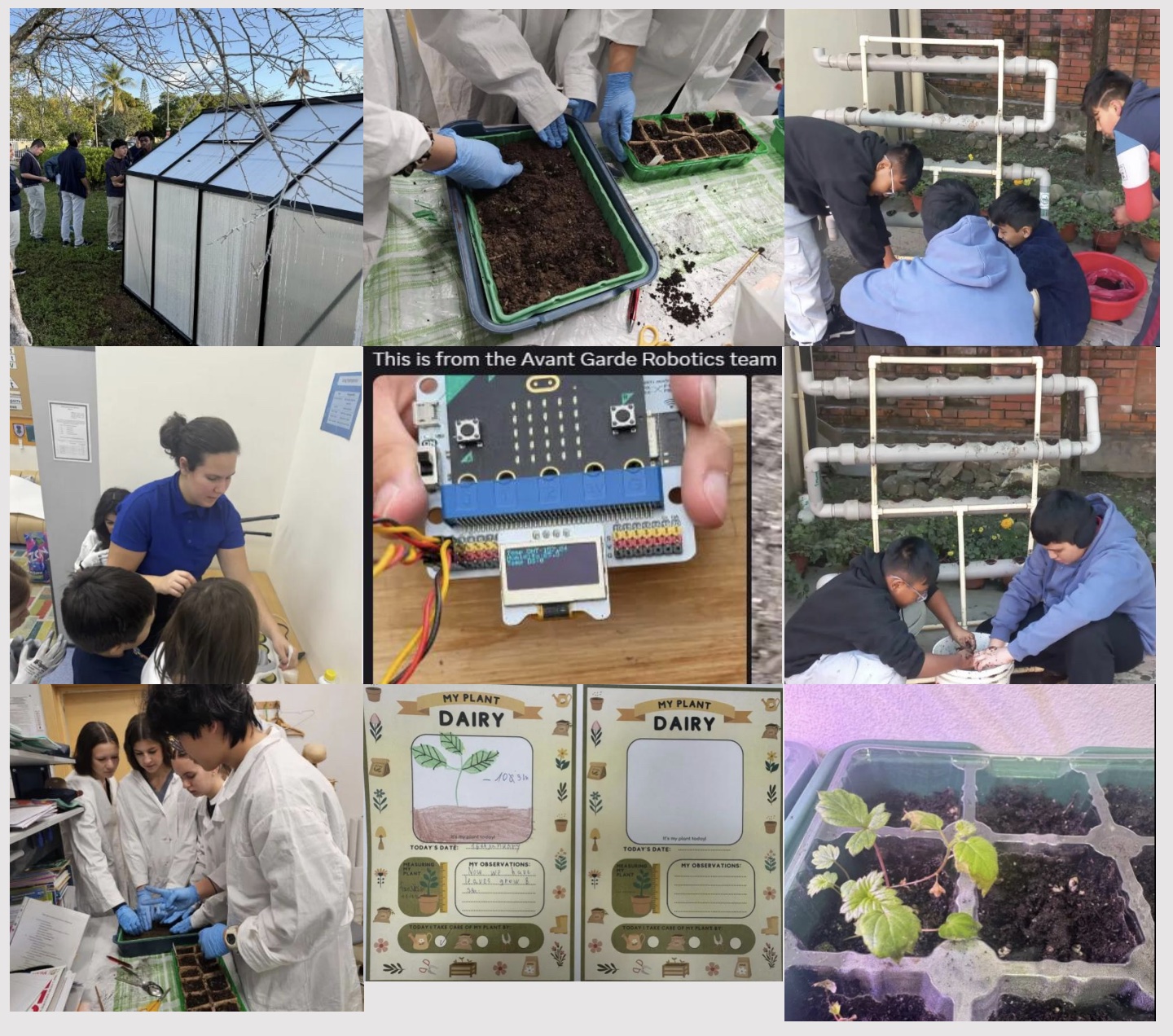
The School Greenhouse project was designed as a multidisciplinary STEAM experience, combining biology, chemistry, engineering, informatics, and environmental science. Students worked in teams at their own schools to design, build, and monitor greenhouse systems adapted to their local conditions.
All schools planted wild strawberry seeds on the same day, ensuring comparable results despite different climates. From that point on, the greenhouses became active learning spaces. Students monitored plant growth and environmental conditions, sharing photos, videos, and data through a collaborative online platform. This allowed them to follow each other’s progress and learn from different environments, creating a shared experience across countries.
The project focused on two growing methods: hydroponics and organic residue-based systems. By working with both, students explored different approaches to plant growth and considered their environmental and economic impact.
Technology also played an important role. Students used sensors and simple monitoring systems to track temperature, humidity, light, and CO₂ levels. This introduced them to basic IoT concepts and allowed them to work with real data, while comparing results with peers in other countries.
Students took an active and leading role throughout the project. They planned, experimented, and analyzed their results, with teachers guiding them along the way. Each team kept a simple diary to track progress and challenges. They also shared updates online, learning from one another and collaborating across countries, showing how students can truly learn, connect, and grow through real-world collaboration.