On April 20, 2026, the International Schools Association (ISA), in collaboration with Tuscany Avant Garde International School, hosted the international STEAM project “Colors and Sounds Without Borders,” bringing together students from Indonesia, Malaysia, Russia, and Nepal, with the participation of Sabilillah Islamic School Malang, Cempaka Schools, the British International School, Nika School, and Swostishree School.
Held in the inspiring setting of the Casentino Valley in Tuscany, the initiative marked the culmination of months of collaborative work, during which students engaged in artistic exploration across cultures through music, visual arts, and storytelling.
The session opened with remarks by Federico Lorenzini and Edgardo Manzitti, both highlighting the importance of cultural exchange and creativity as a bridge between nations.
Throughout the event, students presented a wide range of creative outcomes that reflected deep engagement with their cultural roots.
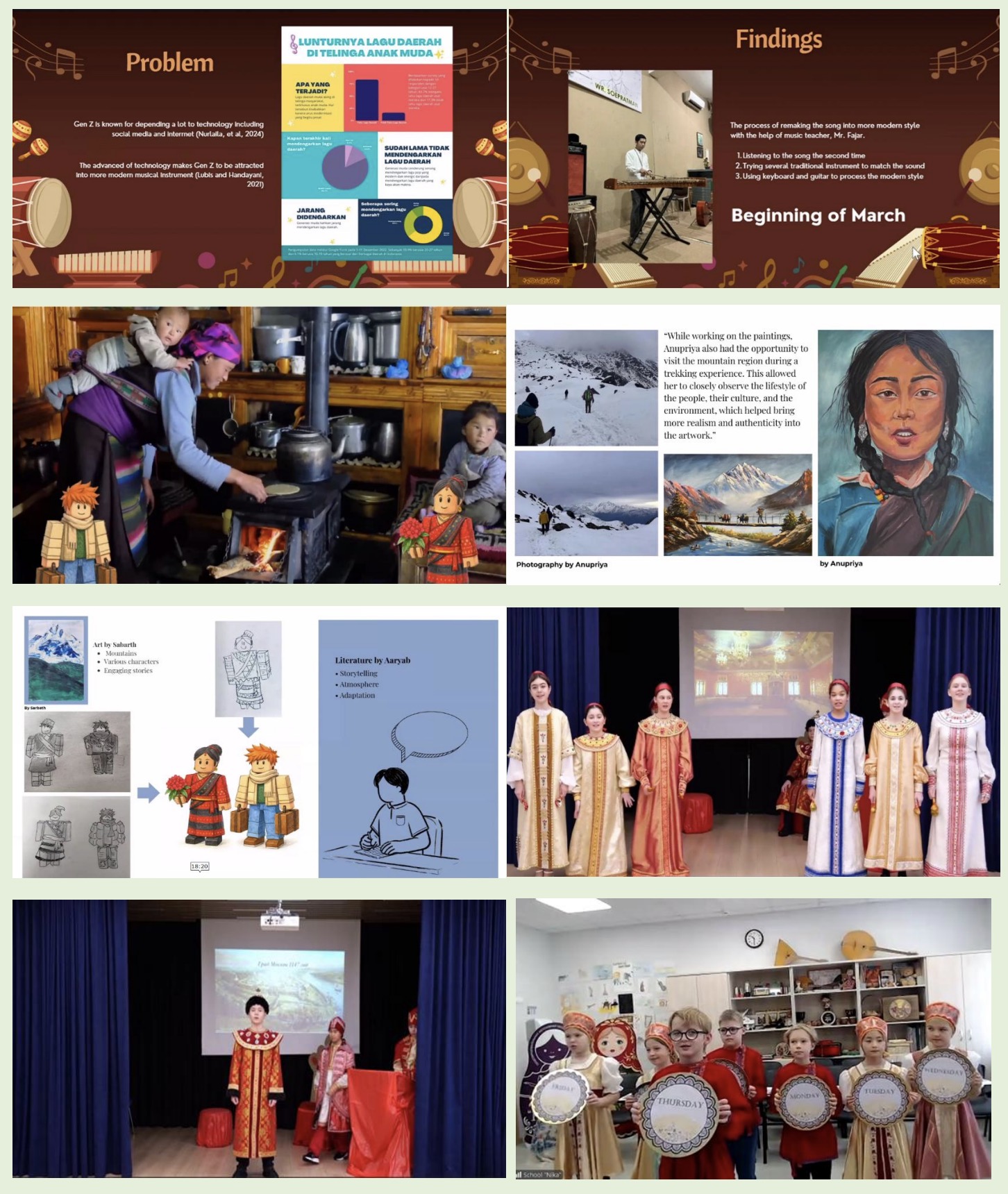
From Indonesia, participants explored a traditional song, reinterpreting it by blending original melodies with modern musical elements, demonstrating how heritage can evolve while remaining authentic.
From Nepal, students developed a comprehensive cultural narrative structured around the country’s main geographical regions, highlighting how landscape shapes identity, traditions, and daily life. Their work was expressed through detailed paintings, photography, written narratives, and carefully crafted models inspired by traditional houses and everyday objects, showing both artistic skill and cultural awareness.
Malaysia’s contribution added another layer of richness to the project, reflecting the country’s multicultural identity through artistic expression and creative interpretation.
From Russia, students brought cultural traditions to life through dynamic performances that combined theater, music, and visual storytelling. They recreated historical scenes and elements of daily life using traditional costumes, symbolic props, and choral singing, offering a vivid interpretation of national heritage. Through songs, staged scenes, and references to traditional customs, they conveyed themes of renewal, community, and continuity.
Across all countries, students demonstrated not only creativity but also strong collaboration and critical thinking. The integration of visual arts, music, literature, and hands-on creation allowed them to transform cultural knowledge into meaningful and tangible outcomes.
The project highlighted how young learners can move beyond simply studying culture to actively reinterpreting and sharing it with others.
“Colors and Sounds Without Borders” stands as a powerful example of international education in action, where creativity, collaboration, and cultural understanding come together to form lasting connections.
The success and impact of this initiative have already generated growing interest among schools worldwide, setting the stage for an even more expansive and influential edition in the coming year.