Education is far more than just transferring academic knowledge and skills. At its heart, education is a process of forming the whole person, and in this process, moral value education plays the role of the primary foundation. Moral values, especially love for one’s fellow human beings (cinta sesama), are the pillars that determine how a child will grow and interact within society. The formation of a strong, integrated character must begin from an early age. In this phase, a child’s mind is like a sponge, ready to absorb every lesson and experience. Instilling noble values such as: honesty, responsibility and empathy.
These three values, along with others, are key to forming individuals who are not only intellectually smart but also emotionally and morally mature. Such individuals will eventually be able to live harmoniously and contribute positively to society. In the midst of rapid technological advancements and the flow of globalization, children are now exposed to complex external influences. Information and values from the outside, both positive and negative, can shape their behavior instantly.
In this context, moral value education becomes increasingly crucial. It serves as a fortress that protects children from the negative impacts of inappropriate culture and information. With a strong character and a clear moral compass, a child will have an internal filter to discern and choose the right actions, making them strong-willed individuals. It is truly best that this education begins from an early age. Instilling these values should be done in a fun way that is relevant to the child’s world through play. Role-playing is a highly effective method for teaching moral values contextually, and by incorporating English, we simultaneously enhance both their moral and linguistic development.
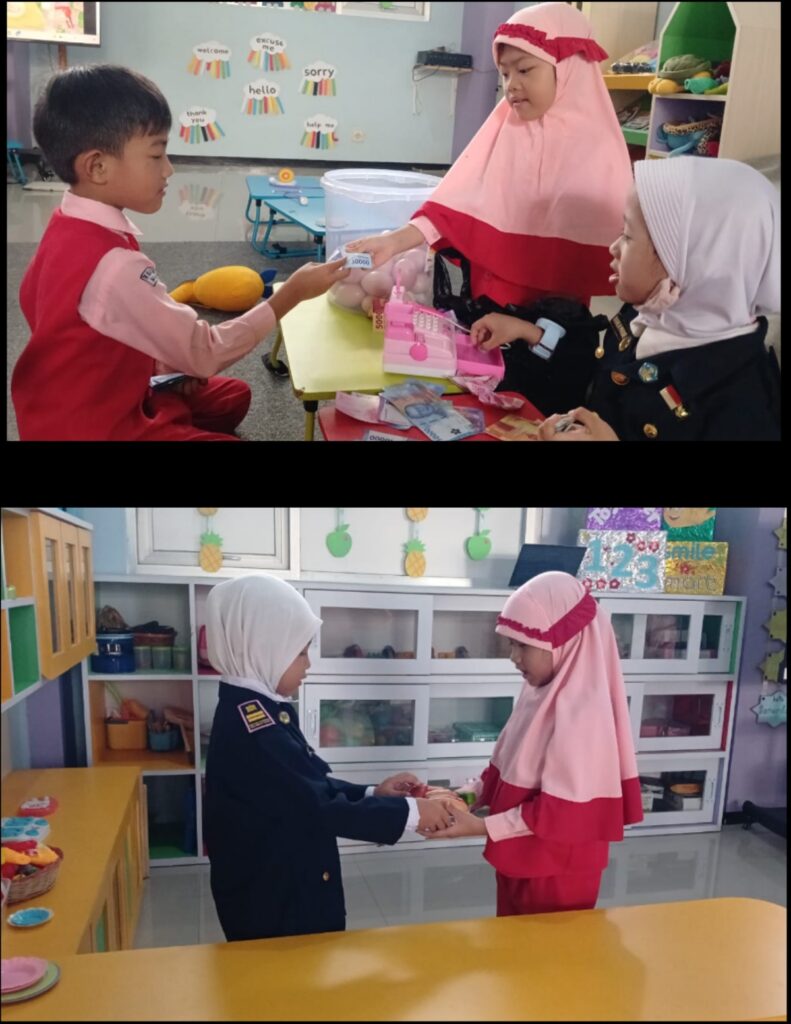
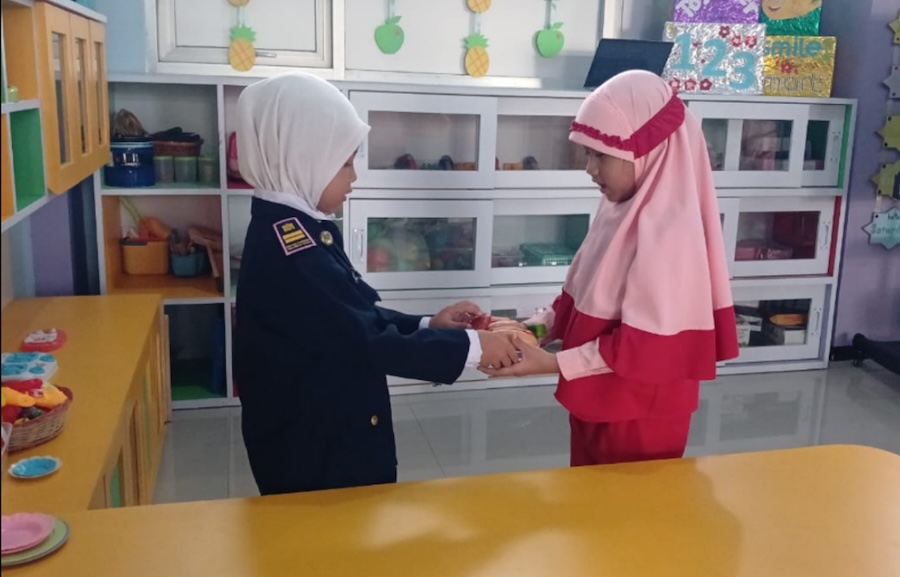
One highly effective activity is the “The Bakery Shop” role-play, where children take on the roles of the seller and the buyer, using simple English phrases. Through this simple game, several important moral values and language skills can be honed. Developing Empathy and Social Communication for example as the seller: the child learns to be friendly (“Hello, welcome to my shop!“), listen to the buyer’s needs (“What kind of cake would you like?”), and understand the perspective of someone requiring a service (cultivating love for one’s fellow human beings in the form of service). As the buyer: The child learns to wait patiently, communicate politely (“May I please have a muffin?”), and understand rules (practicing social communication). Instilling Honesty for example this scenario provides a golden opportunity to practice honesty. For example, when the seller makes a mistake in calculating the change (“Here is your change, 5 dollars.”), the child is encouraged to be truthful (“Oh, wait! I think you gave me too much change.”). This honesty is reinforced by the buyer’s honest role in reporting excess or insufficient money.
By conducting the role-play in English, children not only internalize the values of honesty and empathy but also gain confidence in using the language for practical, real-life social interactions. They are not just memorizing the definitions of ‘honest’ or ‘empathy’ but are experiencing and feeling them directly within a safe social exchange. This practical experience is what will stick and become a part of their character.
Moral value education, focusing on love for one’s fellow human beings and personal integrity, is the most important investment in the future of the generation. Values such as honesty, responsibility, and empathy are the foundations that must be built from an early age, strengthened through contextual and fun methods like role-playing, especially when combined with language practice. With a strong moral foundation, our children will grow up to be individuals who are not only personally successful but also capable of creating a more harmonious, integrated, and compassionate society.
#tkislamsabilillahmalang2 #sekolahsabilillah #sekolahterbaikmalang #internationalschool tkislamsabilillahmalang